

National casino Plinko game
Introduction
The drop mechanics reward precise bankroll planning, since a single ball can swing an entire session in either direction depending on where it settles. Players who track their average return across several hundred drops will get a clearer sense of the game's true volatility than those who judge it by a handful of dramatic results.
For players in Canada who are considering National casino Plinko, the key question is not whether the screen looks entertaining. The real question is what kind of experience the game creates over a session, how volatile it can become depending on settings, and whether that experience fits the player’s expectations. In practice, Plinko can feel calm, almost meditative, on one setup and brutally swingy on another. That contrast is one of the reasons it keeps attracting attention.
In this review, I will focus strictly on the Plinko game page and what it offers in practical terms. I will explain how the drop logic works, why risk selection matters more than many newcomers expect, how the pace affects decision-making, and where the strengths and weak points show up in real play. If you want to understand whether National casino Plinko is worth trying, this is the part that matters.
What National casino Plinko actually is and why it draws so much attention
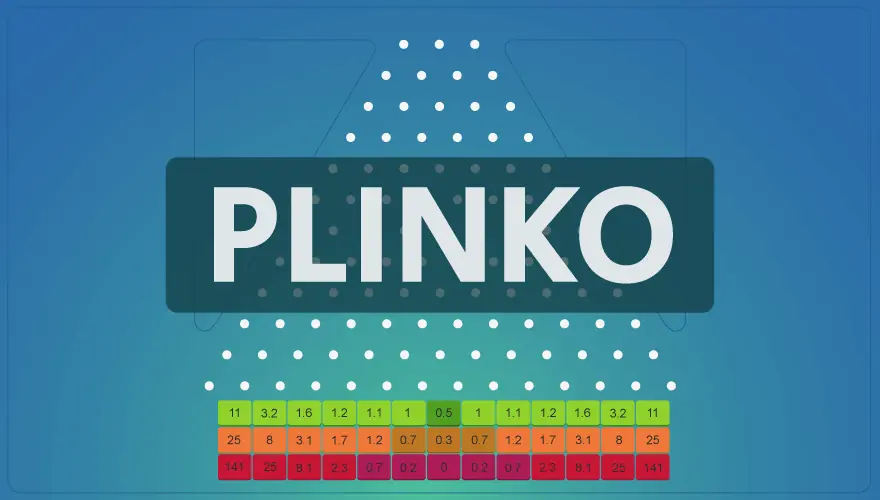
Plinko is a ball-drop casino game built around a simple visual model. A ball falls from the top of the board, hits rows of pins, changes direction repeatedly, and eventually lands in one of several payout zones at the bottom. Each zone carries a multiplier. Lower multipliers tend to sit closer to the center, while the highest ones are usually placed at the edges, where the ball reaches less often.
The reason Plinko became so noticeable is not just its visual clarity. It strips gambling down to a very direct sequence: choose stake, choose risk, drop, result. There are no reels to decode, no paylines to track, no bonus map to unlock, and no long animation cycle between one outcome and the next. That clarity makes the game instantly readable even for players who do not usually spend time on slots or table games.
But what holds attention is not simplicity alone. It is the tension between what looks understandable and what actually feels unpredictable. You can see the whole board. You can see where the large multipliers are. You can watch every bounce. Yet that visibility does not translate into control. In fact, Plinko often creates a stronger emotional pull precisely because the route looks observable while the result remains uncertain. That is a very different psychological effect from a reel spin, where the random process is mostly hidden.
One of the most interesting things about National casino Plinko is that players often mistake visual transparency for strategic depth. The board is open, but the outcome still comes from randomized pathing within the game’s underlying math. That means the experience can feel more “fair” or “honest” to some users, while still being fully chance-driven. This is an important distinction before the first session begins.
How the Plinko system works in practice
At its core, the mechanic is built on repeated deflections. Each time the ball touches a peg, it is redirected left or right. After enough collisions, the ball reaches one of the bottom slots. The distribution of outcomes is not even. Central areas are hit more frequently, while extreme edge positions occur less often. This is why the largest multipliers are usually attached to the rarest landing zones.
On the National casino Plinko page, the player’s main decisions typically revolve around three variables: stake size, number of rows, and risk level. Not every version displays these controls in exactly the same way across platforms, but the logic is generally consistent. More rows mean more collisions before the final landing. Risk level changes the payout curve. A lower-risk setup usually compresses the result range, while a higher-risk setup spreads outcomes further apart.
That sounds technical, but the practical meaning is straightforward. If you choose low risk, you are more likely to see modest, frequent returns and fewer dramatic spikes. If you choose high risk, the board becomes more punishing in the short run, but it also allows for much larger multipliers. The game does not become more skill-based when you change risk. It simply changes the shape of possible results.
I think this is where many first-time players misread Plinko. They assume the ball’s visible movement means they can “sense” patterns after a few drops. In reality, the board is better understood as a payout model with a visual path attached to it, not as a puzzle to solve. Watching the ball bounce is part of the appeal, but it should not be confused with an opportunity to predict the next result reliably.
| Element | What it does | What it means for the player |
|---|---|---|
| Stake | Sets the base amount for each drop | Directly affects session cost and the value of any multiplier hit |
| Risk level | Changes the payout distribution | Low risk usually gives steadier results; high risk creates wider swings |
| Rows | Changes the path length and board structure | Can alter hit distribution and how often extreme outcomes appear |
| Multiplier slots | Determine final return for each landing position | High values are usually linked to less frequent results |
Another detail worth noting: Plinko often feels more interactive than it really is because the player makes setup choices before each drop. Those choices matter, but they do not turn the session into a tactical contest. They shape volatility and pacing. That is useful, but it is not the same as influence over the ball’s path.
Why the game feels engaging and how its tempo affects a session
The tempo of Plinko is one of its strongest defining traits. A round resolves quickly. There is little downtime, and the result arrives in a clean, visual way. That makes the game easy to repeat, and repetition is central to how the experience builds. A slot often asks the player to wait through reel spin, symbol evaluation, and sometimes layered features. Plinko gets to the outcome faster.
This speed changes player behaviour. In a short session, it is easy to place more rounds than intended because each individual drop feels lightweight. The interface does not demand much attention, and that can lower the psychological barrier between one decision and the next. From a responsible play perspective, this matters. Fast resolution can be enjoyable, but it also makes bankroll management more important.
There is also a specific kind of suspense in Plinko that differs from most other casino formats. The result is not hidden until the end; it unfolds in front of you. That creates a micro-drama on every drop. Even when the mathematical expectation remains unchanged, the path itself gives the impression that the outcome is “developing” in real time. This is one of the smartest aspects of the format. It turns a simple random event into a visible sequence, and that sequence keeps players emotionally invested. Those comparing loyalty perks can weigh this section against National Casino withdrawal times tips.
A memorable observation from my own analysis is this: Plinko often feels like a short-form gambling product designed for the attention economy. It delivers instant readability, quick resolution, and visible suspense in a matter of seconds. That does not make it shallow, but it does explain why it works so well for players who want immediate engagement rather than layered structure.
Understanding probabilities, session swings, and result expectations
Before trying National casino Plinko, a player should understand one basic point: the board may look balanced, but the returns are not distributed evenly. Most drops tend to cluster around the more common lower or mid-range multipliers, while the largest outcomes sit on the far edge of the distribution. In practical terms, this means the spectacular hits that attract attention are not representative of the average drop.
That is where probability and perception begin to diverge. Because the highest multipliers are visible on screen, they occupy a lot of mental space. Players remember them, watch for them, and imagine the ball reaching them more often than it statistically will. This is not unique to Plinko, but the design makes the effect especially strong. The large numbers are always in view, so they remain psychologically active throughout the session.
To approach the game more realistically, I would break the player’s expectations into three layers:
Short-term results can vary sharply. Even on moderate settings, several low returns in a row are normal.
High-risk mode changes the experience dramatically. It can produce more dead stretches and stronger spikes, which some players enjoy and others find frustrating.
A visible board does not make outcomes easier to predict. The randomness is simply presented in a more transparent-looking format.
If a player enters Plinko expecting regular big multipliers, disappointment comes quickly. If they enter expecting a chance-based game with adjustable variance and rapid feedback, the experience is easier to judge fairly. This is why understanding the payout curve matters more here than in many casual-looking casino products.
| Session style | Typical feel | Main caution |
|---|---|---|
| Low risk | More stable, less dramatic | Can feel repetitive if you want larger swings |
| Medium risk | Balanced mix of common and less frequent stronger returns | Still capable of uneven streaks |
| High risk | Sharper tension and bigger upside on paper | Long dry runs are more likely to feel punishing |
Another observation that stands out: in Plinko, disappointment often comes not from losing alone, but from “almost” paths. A ball that flirts with an edge multiplier before dropping back into a modest slot can feel more emotionally charged than a plain losing spin on a slot. The animation creates near-miss energy very efficiently. Players should be aware of that effect because it can make the session feel more personal than it really is.
How risky is National casino Plinko and who is it really suited for?
Plinko can be relatively mild or highly aggressive depending on configuration. That is why broad statements about the game can be misleading. Saying “Plinko is risky” is only half true. The more accurate version is that Plinko allows the player to choose how concentrated or stretched the result distribution becomes, and that choice has a major impact on the session.
For cautious players, lower-risk settings can make the game feel smoother than many high-volatility slots. The returns are usually less explosive, but the session may last longer and feel more controlled. For players who actively chase large multipliers, high-risk Plinko can become one of the more unstable formats in a casino lobby, especially when paired with fast repeat play.
In my view, National casino Plinko suits the following player profiles best:
Players who value simplicity. If you want a format that is immediately understandable, Plinko delivers that.
Players who enjoy quick rounds. The pace is ideal for short, focused sessions.
Players comfortable with variance. Especially on higher-risk settings, patience matters.
It may be a weaker fit for players who prefer layered bonus systems, narrative presentation, or a sense of progression. Plinko does not build toward a feature round. It does not create the long-form anticipation of unlocking compare National Casino free spins before signing up or triggering a special mode. The excitement is compressed into each drop rather than spread across a broader structure.
This difference matters more than many people think. Some players interpret Plinko’s simplicity as freedom. Others experience it as a lack of depth after ten or fifteen minutes. Neither reaction is wrong. It depends on whether you want a concentrated chance-based loop or a more developed casino format.
Where Plinko stands apart from slots and other casino games
The easiest comparison is with classic slots, but the gap is wider than it first appears. A slot is built around symbol combinations, paylines or cluster systems, and often several layers of features. Plinko is built around a single event: the descent of the ball. There is no symbol-reading stage and no bonus architecture carrying the session forward.
That changes the player experience in several ways. First, Plinko is more transparent visually. You always see the board and the multiplier positions. Second, the outcome arrives faster. Third, the emotional pattern is different. A slot often alternates between routine spins and occasional feature spikes. Plinko creates a mini-suspense cycle on every round.
Compared with roulette, Plinko shares some immediacy but feels more animated. Compared with crash-style games, it offers less direct decision pressure during the round itself. Compared with table games, it demands far less rules knowledge. This makes it accessible, but also narrower in strategic texture. Plinko is not trying to compete with blackjack on decision depth. It is trying to deliver fast, readable randomness with adjustable variance.
That is why I would not describe National casino Plinko as a substitute for every casino format. It fills a specific role. It sits somewhere between slots and instant-win products: more visual than the latter, more stripped down than the former, and often more rhythm-driven than either.
Practical strengths and weaker points of the format
Any serious review of Plinko should separate what looks attractive from what remains useful over time. The game has clear strengths, but it also has limits that become obvious after repeated play. Those comparing loyalty perks can weigh this section against withdrawal limits checklist.
The strongest side is accessibility. A new player understands the structure almost immediately. That lowers friction and makes the first session easy to enter. The second major advantage is pace. If you want a game that does not bury the result under layers of presentation, Plinko is efficient. The third is configurability. Risk settings and board parameters can meaningfully change how the session feels.
At the same time, the format has a ceiling. Because the core action never changes, repetition can set in faster than in slots with multiple bonus states or evolving mechanics. Another limitation is that the visible path may encourage players to overinterpret outcomes. The board invites pattern-seeking, even though the practical value of that instinct is limited. Finally, the speed that makes Plinko appealing can also make it costly if stake discipline is weak.
Strong point: very easy to understand from the first minute.
Strong point: quick round resolution keeps the session active.
Strong point: risk settings create genuinely different session moods.
Weak point: limited structural variety over long play.
Weak point: high-speed repetition can drain a bankroll faster than expected.
Weak point: visual near-misses can distort how players interpret probability.
One more useful observation: Plinko is a game where the interface can make restraint feel unnecessary. That is not because the game is deceptive in a technical sense, but because the action looks so light and frictionless. A drop takes only a moment, and that changes how people value each decision. For some players, this is harmless convenience. For others, it is exactly where discipline starts to slip.
What to check before launching a session on National casino Plinko
Plinko carries a distinct mathematical profile, so treat it as more than a casual novelty. The simple screen hides a session flow that hinges on your configuration. A few practical checks separate a controlled trial from a frustrating run. Review the coupons checklist to see the wagering rules tied to each offer.
First, look at the available risk setting and understand what you want from the session. If the goal is to explore the game and learn its rhythm, lower or medium variance is usually the better entry point. Jumping straight into high risk because the top multiplier looks tempting often leads to a distorted first impression.
Second, set a stake that matches the game’s speed. This matters more in Plinko than many players expect. A stake that feels small on a slot can become expensive here if you place many drops in quick succession. The round cycle is short, so bankroll planning should account for frequency, not just individual bet size.
Third, if a demo mode is available, use it to understand the emotional rhythm of the board rather than to “test a strategy.” Demo play is valuable because it shows how often ordinary results appear, how edge multipliers behave in practice, and whether the pace suits you. It is less useful if you treat a short sample as predictive.
Finally, pay attention to your own style. Ask yourself a simple question: do you enjoy repeated fast outcomes with visible suspense, or do you prefer games that build toward larger feature moments? Your answer says more about whether Plinko fits you than any marketing label ever will.
Final verdict on National casino Plinko
National casino Plinko offers a very specific kind of casino experience. It is not built around story, symbols, or feature chains. It is built around fast drops, visible randomness, and adjustable variance. That focus is the game’s biggest strength. It makes the format easy to understand, quick to enter, and immediately engaging for players who like direct results.
What I find most valuable about Plinko is that its simplicity is real, but incomplete. The interface is simple. The emotional experience is not. Depending on the risk level, the same board can feel steady and lightweight or tense and punishing. That is why the game works well for some players and not for others. If you enjoy short rounds, clear visuals, and the chance to tune the session’s swing profile, Plinko can be a strong fit. If you want layered features, strategic decision-making, or a slower build of anticipation, another format will probably suit you better.
The practical takeaway is clear. National casino Plinko is worth trying if you understand what it actually offers: rapid-fire chance, transparent-looking but still random outcomes, and a session flow that can accelerate quickly. Its key strengths are clarity, pace, and flexible risk settings. The main caution points are bankroll speed, the temptation to chase rare multipliers, and the ease with which visible near-misses can pull attention back into the next drop.
In short, Plinko is not just a simple ball-drop diversion. It is a compact volatility tool wrapped in a clean visual format. For the right player, that is exactly the appeal. For the wrong one, it can feel repetitive or too swing-heavy surprisingly fast. Knowing that before you press drop is the most useful advantage you can have.
FAQ
How does Plinko work when the ball drops?
A ball is released from the top and bounces off pegs as it falls. Each landing zone is linked to a multiplier that boosts the result for that round.
What should a player check before starting a Plinko session in real-money mode?
Log in to the casino account and make sure the game is set to real-money play, not demo mode. If a promo or bonus balance applies, confirm it in the account area so the round is counted correctly.
Does Plinko run in demo mode as well as real-money play?
Yes. Demo mode lets players practice the ball-drops and multiplier flow without using casino funds.
When a bonus balance is active, can the Plinko rounds use that balance?
Many promotions apply to specific casino games, and Plinko may be eligible depending on the offer terms shown in the account. Check whether the active promo balance is applied to the game rounds before starting.
In what way is the Plinko demo experience different from real-money play on National?
Demo mode uses simulated funds and does not affect the player balance. Real-money play uses the actual account balance and any applicable limits or promotion rules shown for the account.
How does volatility show up in Plinko risk level for players?
Volatility is reflected through how often the game produces lower versus higher multiplier outcomes. Higher volatility generally means bigger swings, so it helps to start with a smaller budget even in demo mode.
What are the main table limits a player should review before playing Plinko?
Check the minimum and maximum stake per round inside the game interface. Confirm any account-level deposit, withdrawal, or play limits in the account area to avoid interruptions mid-session.
If a bonus code was entered for a promo, does it automatically apply to Plinko rounds?
Promo codes and bonus balances only apply when the offer conditions match the account and the deposit or activation method. After claiming the promo, open Plinko and confirm which balance is being used for the next round before placing a stake.